Aikido — and the wider Japanese tradition.
Aikido, with the full Japanese spectrum behind it.
The practice
I usually refer to my martial arts as Aikido but it covers most of the spectrum of Japanese martial arts from karate to aikido. The training has always emphasized the unity of these arts rather than their separation — a position I owe entirely to my teacher.
Uchi deshi to Minoru Mochizuki shihan.
Lineage
I was uchi deshi (inside student) of Minoru Mochizuki shihan, one of the earliest uchi deshi to Morihei Ueshiba, founder of Aikikai. Mochizuki sensei was also one of the most broadly experienced martial artists ever to train with Ueshiba sensei. Between 1925 and 1932 (age 18 to 25), under the direction of Judo founder Jigoro Kano shihan, Minoru Mochizuki earned teaching credentials in karate, judo, koryu ju-jutsu, koryu sword, and aiki-jujutsu.
The Yoseikan way of teaching.
Method
In Aikido classes at his yoseikan dojo in Shizuoka, Mochizuki sensei taught all these arts in a melange in every session — using aikido to defend against judo, karate, ju-jutsu, and attacks with sword and other weapons. Nothing was held in isolation. Every technique was tested against every other tradition in the room.
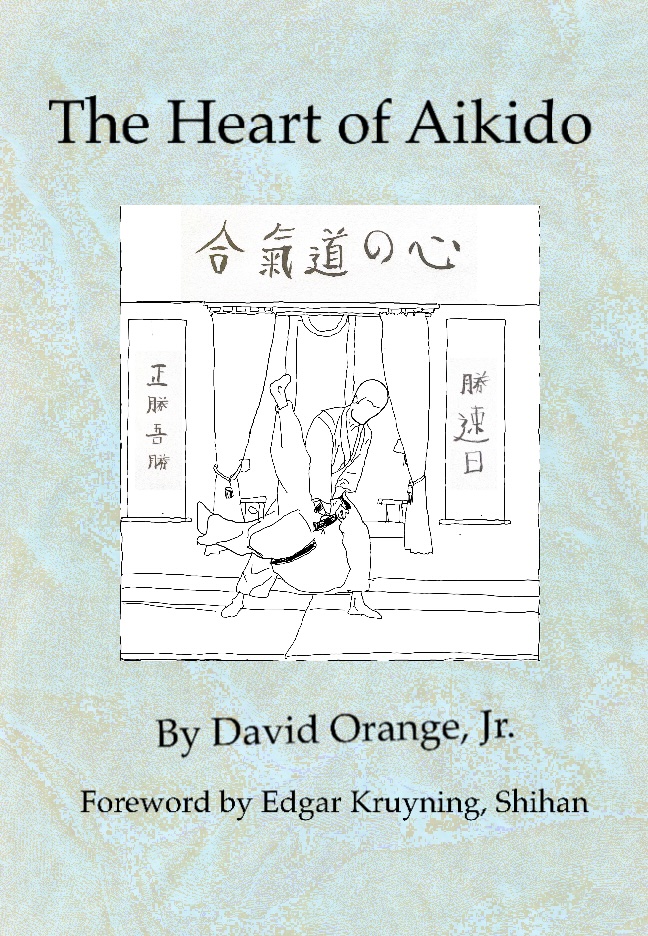
The Heart of Aikido — a book in progress.
Upcoming book
My upcoming book, The Heart of Aikido, explores the techniques and philosophy of aikido, its nature as a black belt art, a military art, and an art of civilian self defense. It addresses the question of why aikido has fallen in reputation and popularity over the decades.
Way and War — ideal and reality.
The thesis
I submit that modern aikido has lost the distinction between Way and War — between the ideal and the reality of the art. Recovering that distinction is the work of the book, and of the practice itself. I foresee a future of great respect for aikido.